

By: Erik Bahnsen – Director, Casualty Industry Analytics
Executive Summary
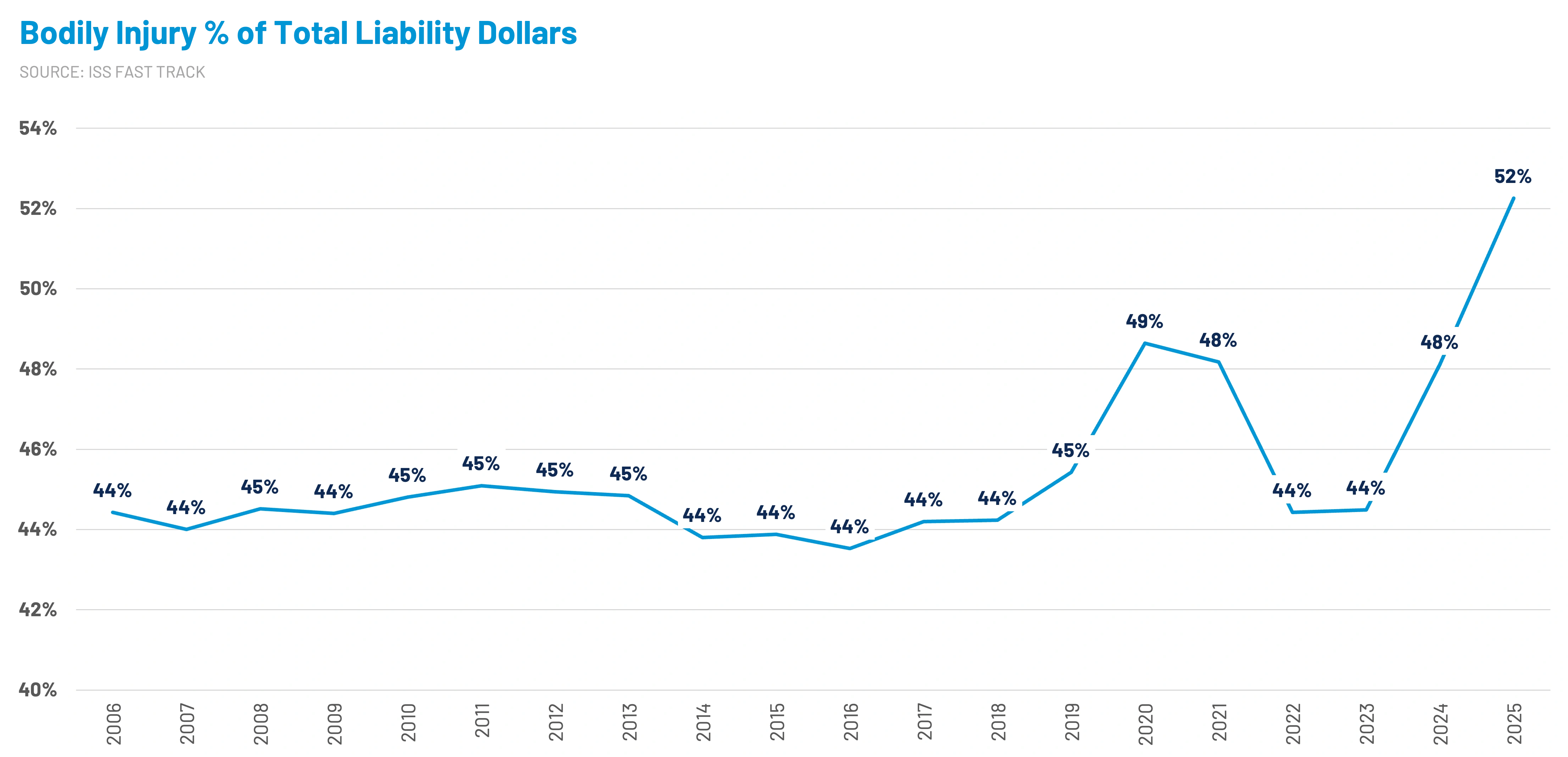
For the past several decades, bodily injury claims occurred at roughly one-fifth the frequency of auto physical damage claims. Yet, by 2025, they occurred in one out of four auto physical damage claims. Furthermore, the total dollars paid for bodily injury claims surpassed auto physical damage payouts for the first time. BI represented 52.3% of the combined dollars paid across the two claim categories, up from 44.4% in 2022.
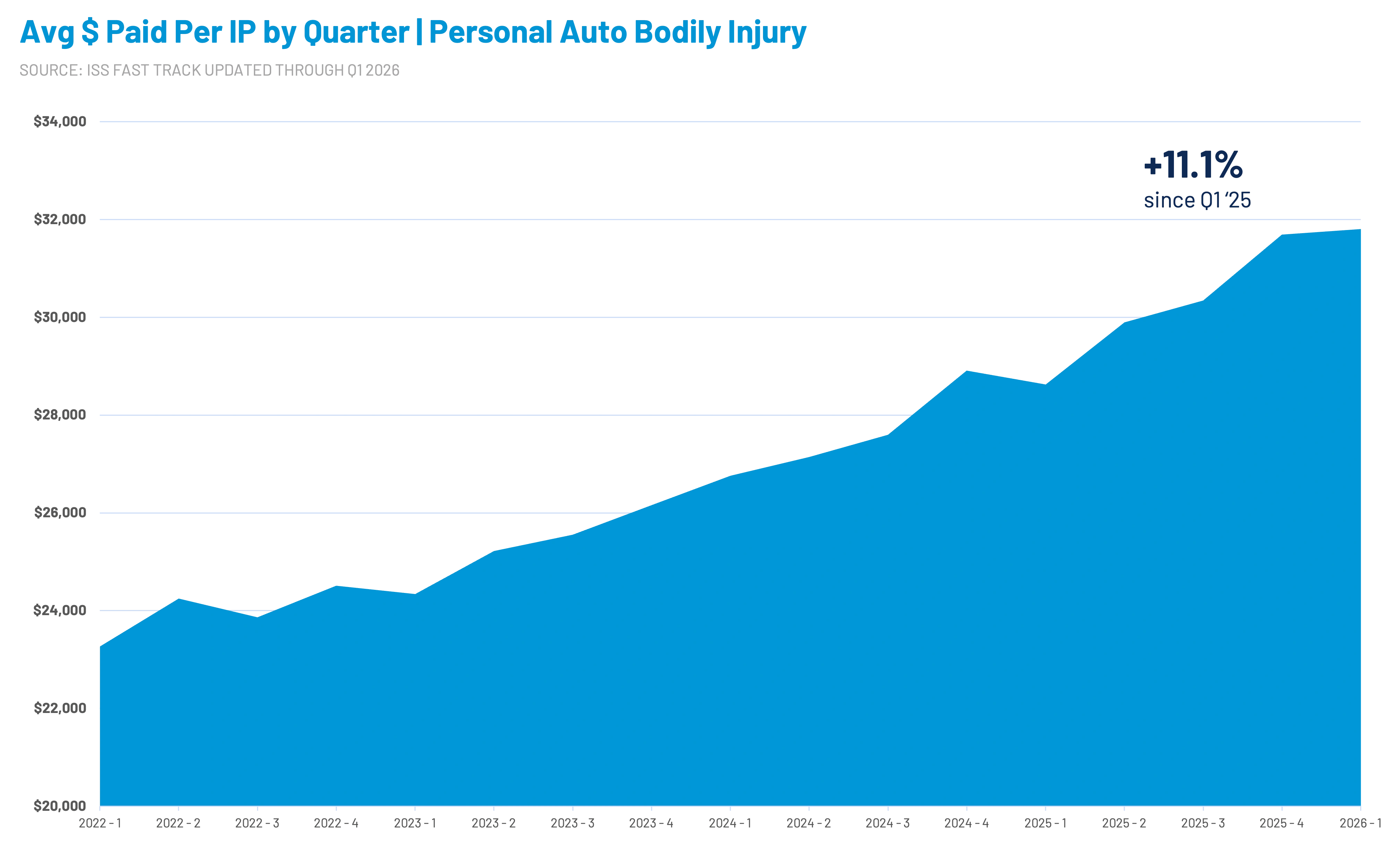
That 7.9-percentage-point shift in three years is approximately five times faster than the longer-term rate of change, and it occurred because of a unique convergence of frequency and severity pressure: bodily injury claim frequency increased over the last two years by 4%, while property damage paid claim frequency decreased by 12.6%, according to ISS Fast Track data. Additionally, the average personal auto bodily injury claim payout increased 21% over the same two-year period.
This shift is interesting and not simply because one category has overtaken another, but because of what it suggests about the changing economics of auto claims. The number of injuries, medical procedures, and treatment days alone does not fully explain the increase – it’s more likely due to several converging trends:
- Increasing numbers of uninsured/underinsured motorists
- Healthcare inflation, particularly auto liability claims
- Changing treatment patterns
- Greater attorney involvement
- Rising social inflation
- More sophisticated claim narratives
- The introduction of generative AI technology
The most recent acceleration in BI costs began around the same time generative AI tools entered the mainstream, but this correlation should be considered more of a force multiplier rather than the sole influence behind this trend.
Generative AI didn’t create medical inflation, change jury sentiment, or cause rising treatment costs, but it is lowering the time and effort required to turn medical records, bills, police reports, photographs, and claimant narratives into highly organized demands.
A New Claims Cost Crossover
Fifteen years ago, BI accounted for approximately 45% of the dollars paid across BI and APD claims. By 2025, that share had reached approximately 53%.
Most of this increase occurred between 2022 and 2025, when BI’s share of dollars paid increased by an average of approximately 2.6 percentage points per year, compared with about half a percentage point annually over the longer historical period. The change is especially striking given the significantly lower frequency of casualty claims relative to APD claims.
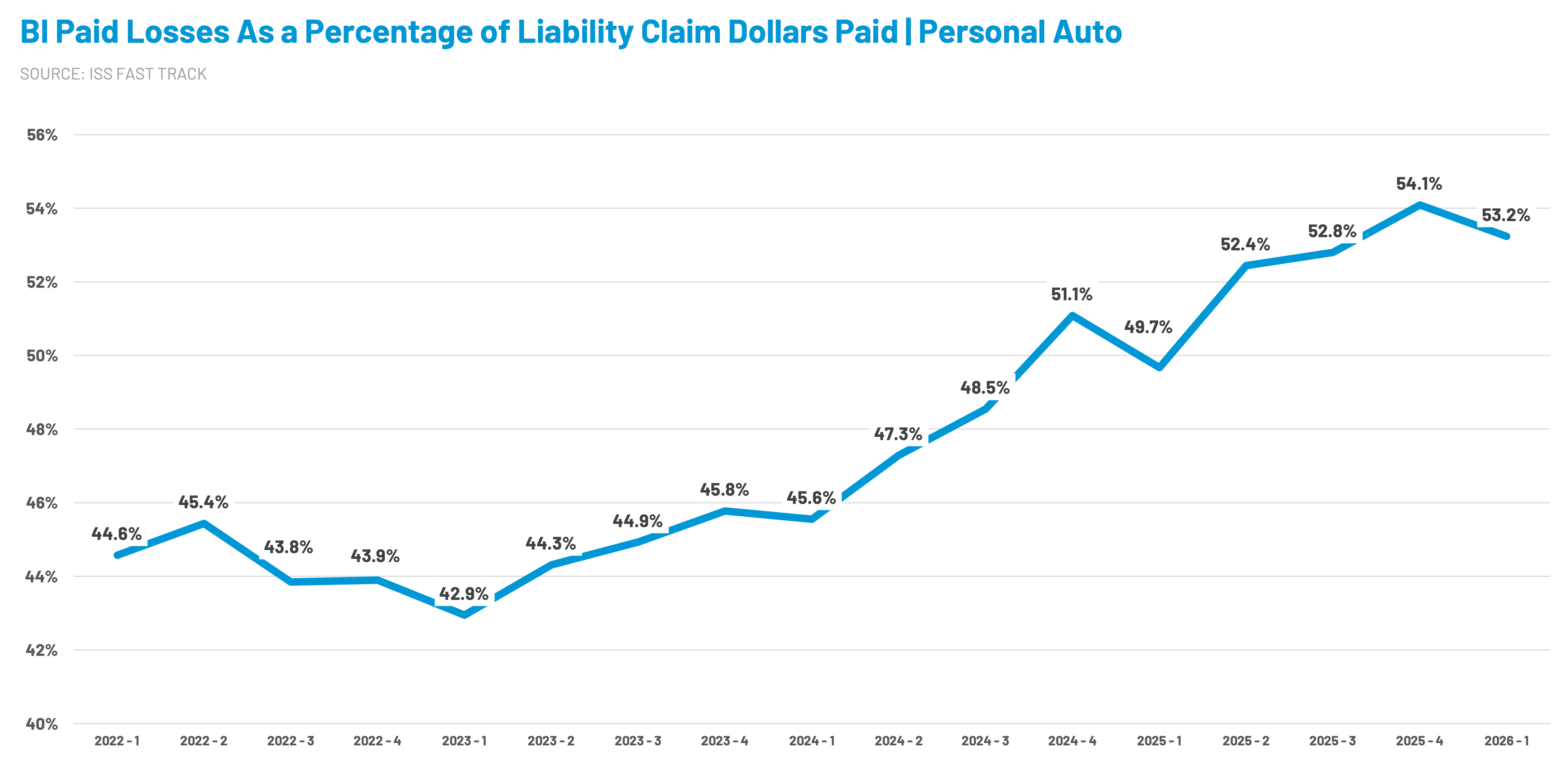
Other industry measures point in the same direction. The average amount paid per personal auto BI claim has increased approximately 9% to 10% annually, rising more than 30% over four years to exceed $30,000 per feature. Approximately 70% of that inflation has occurred since the first quarter of 2020.
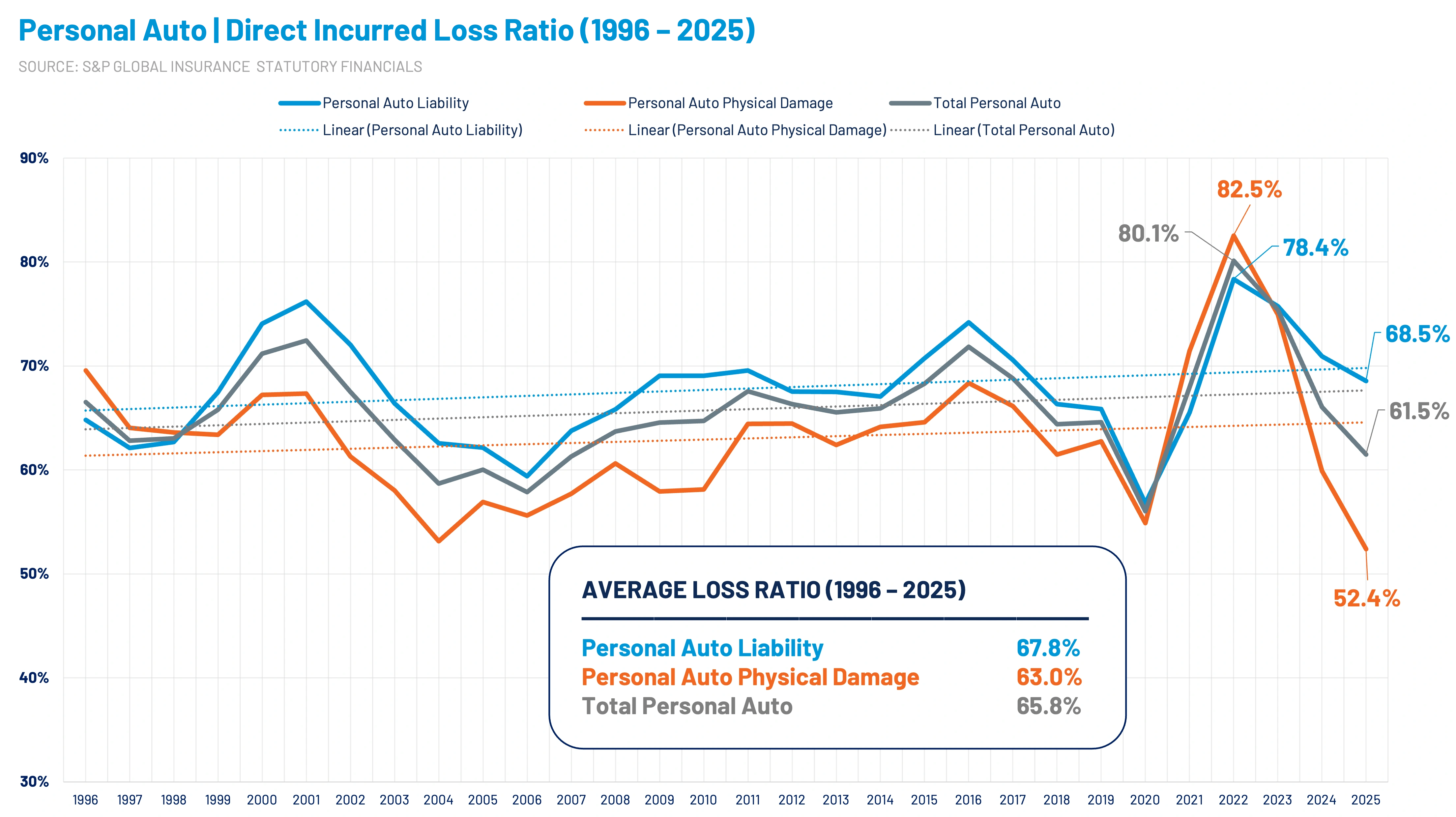
The increasing profitability reflected in overall personal auto results can therefore obscure an important divergence beneath the surface. In 2025, the liability loss ratio was running approximately 20 points higher than the APD ratio, driven in large part by increasing BI frequency and severity.
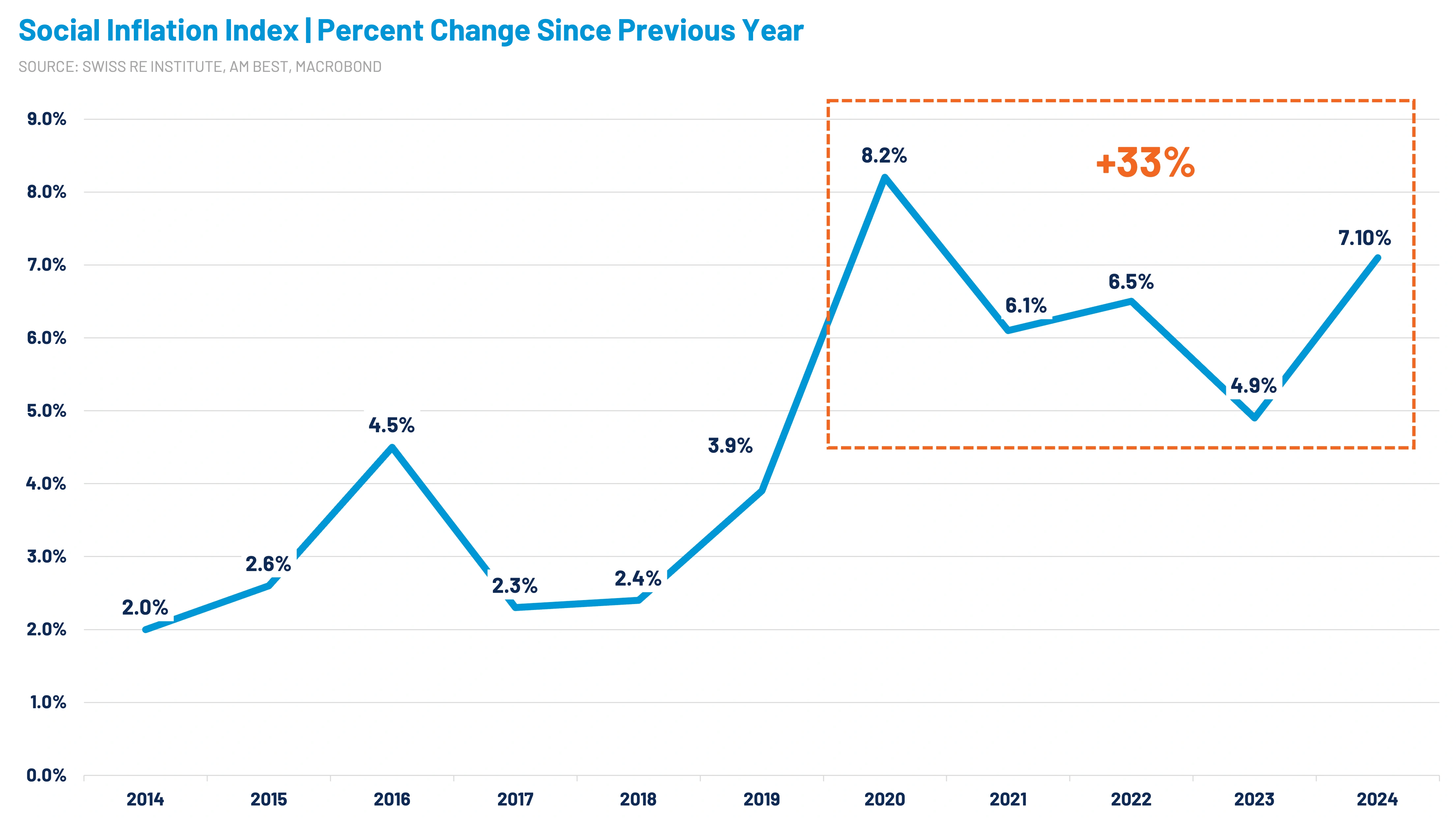
External pressures are amplifying the shift. CCC’s 2026 Crash Course report cited research estimating a 33% increase in liability costs associated with social inflation between 2020 and 2024, a 52% year-over-year increase in verdicts of $10 million or more, and a cumulative economic and social inflation impact of $92 billion to $102 billion on personal auto over the past decade.
Collectively, these trends suggest BI severity could be the result of a system in which medical, legal, economic, and operational complexity increasingly reinforce one another.
Medical Treatment is Changing Shape
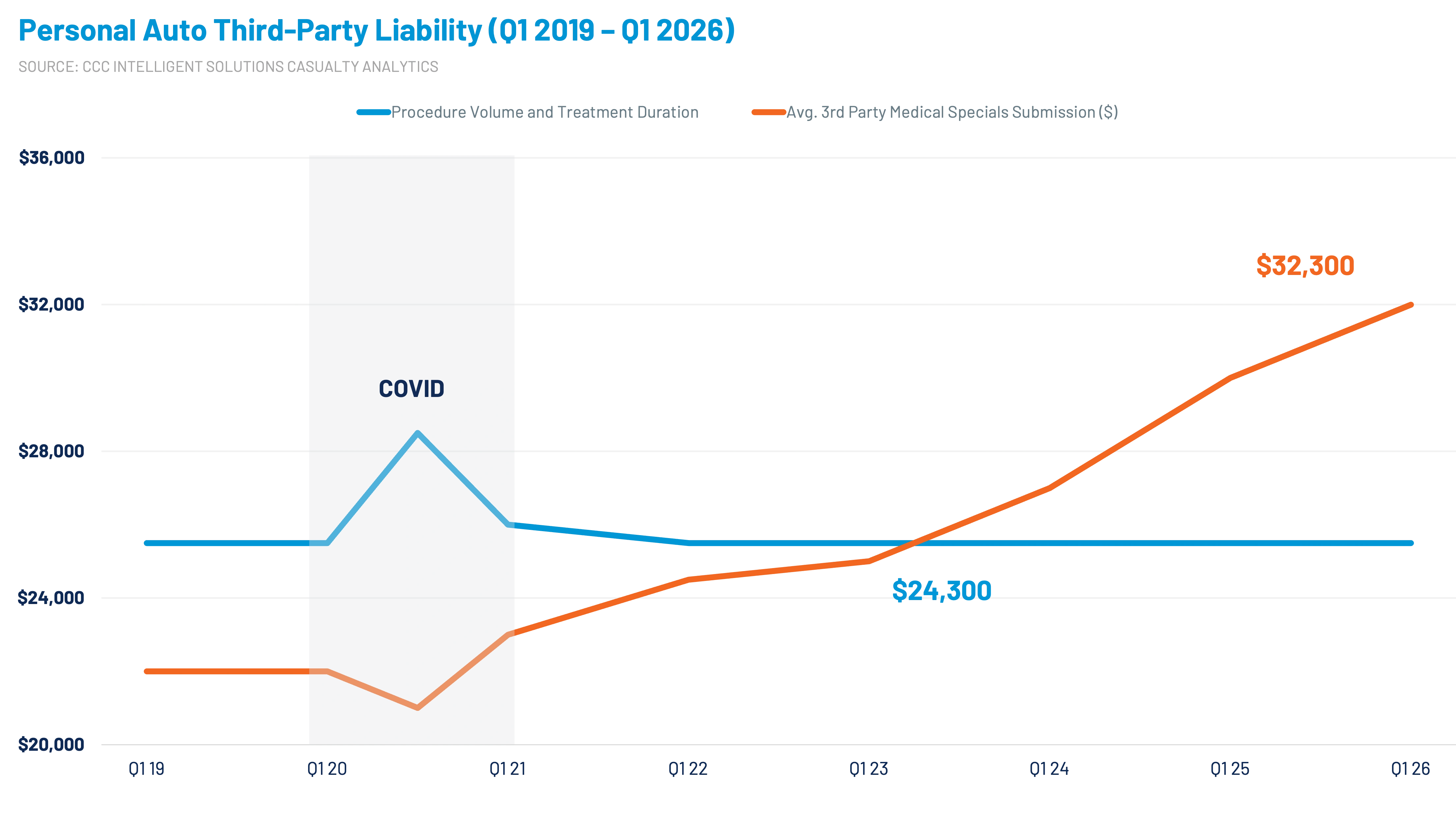
CCC casualty analytics show that average third-party medical specials – the submitted medical expenses considered during claim evaluation and negotiation – increased from approximately $24,300 in the first quarter of 2023 to $32,300 in the first quarter of 2026. This represents a 33% increase in three years, even as the underlying indicators for procedure volume and treatment duration remained comparatively stable.
The mix and timing of treatment are changing as well. Traditional high-acuity surgical procedures such as spinal fusions and discectomies continue to contribute to severity, but lower-complexity interventions are becoming increasingly consequential. CCC medical bill review data shows growing utilization of corticosteroid injections, platelet-rich plasma (PRP) therapy, and extracorporeal shockwave therapy (ESWT) – procedures that can generate significant expense.
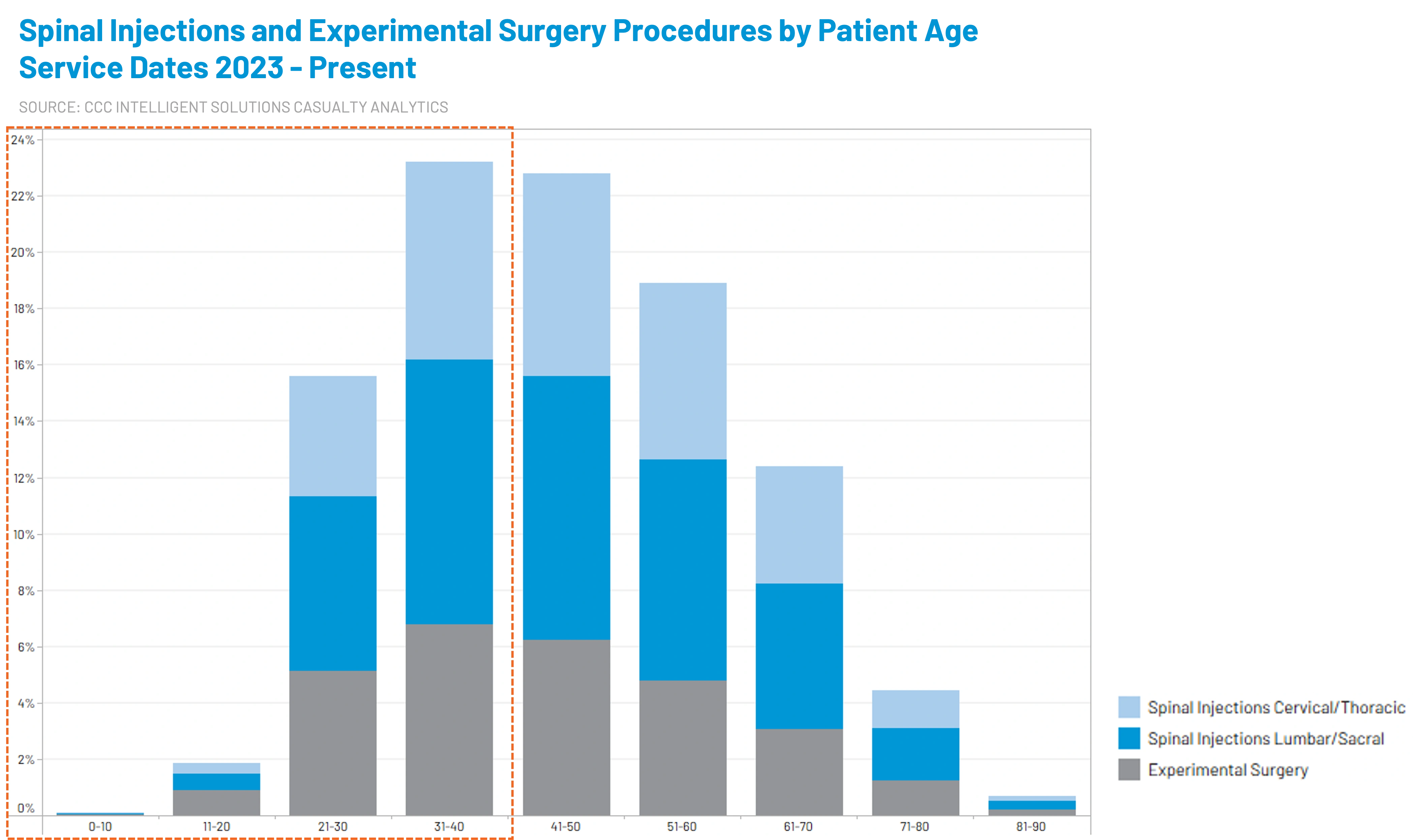
PRP treatment alone averages approximately $11,000 to $12,000 per injured party, frequently involving three or more injections. Shockwave therapy averages eight to nine sessions per claimant. Experimental procedures are also occurring earlier, averaging 122 days from the date of loss compared with 166 days three years earlier. Approximately 40% of these lower-complexity surgical treatments involve claimants age 40 or younger.
These findings illustrate just how quickly a relatively routine soft-tissue claim can evolve into a high-severity exposure when repeated interventions, facility charges, future treatment recommendations, and general damages compound.
For insurers, appropriate evaluation increasingly depends on understanding the complete treatment trajectory: when symptoms began, what objective findings support the diagnosis, whether conservative care was attempted, how the claimant responded to each intervention, and whether subsequent procedures were based on documented outcomes or predetermined treatment schedules. That evaluation is becoming more data intensive at the same time demands are getting faster and more sophisticated.
The Generative AI Coincidence?
The sharpest increase in average medical specials began soon after mainstream adoption of generative AI tools in late 2022.
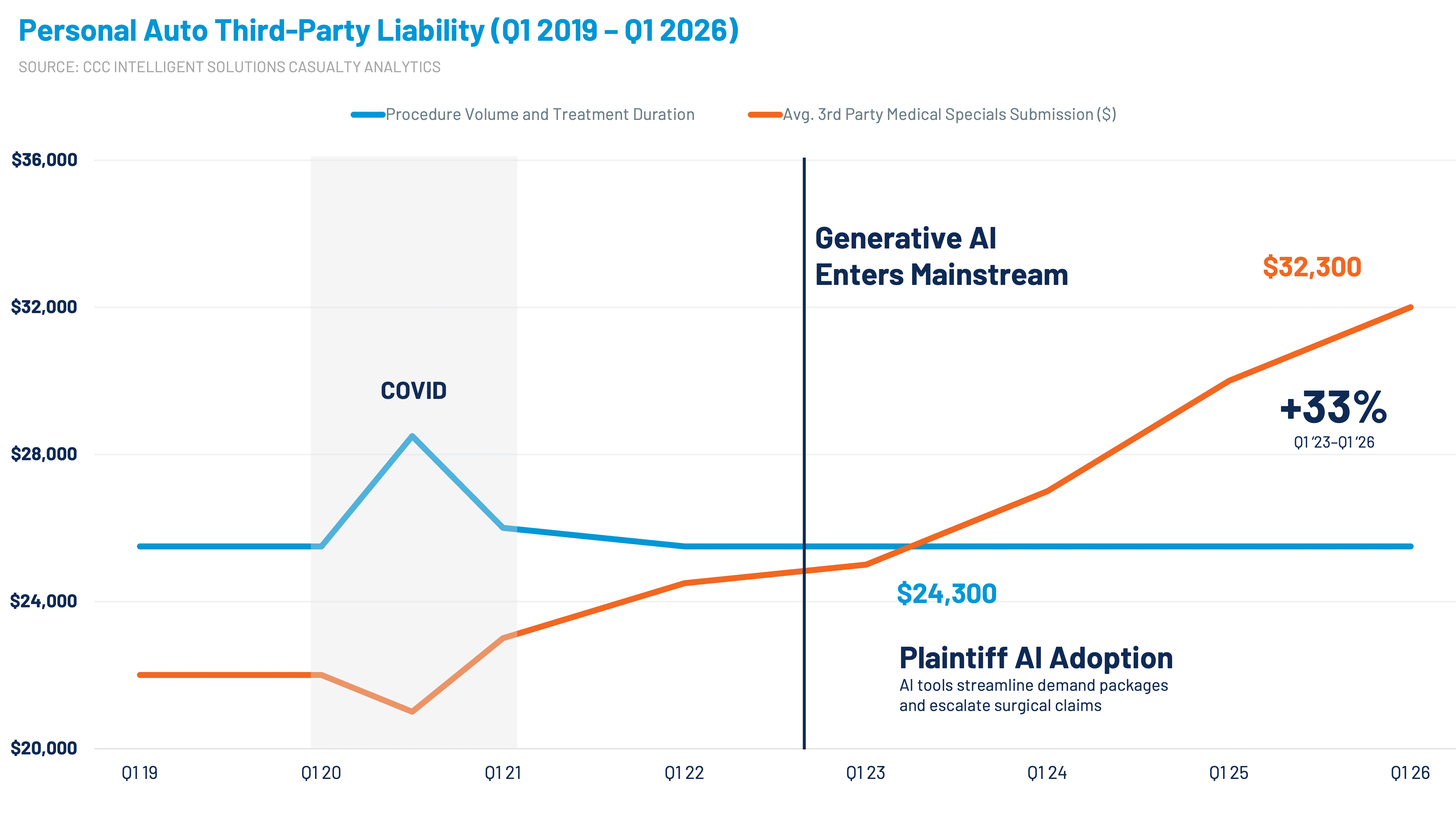
That timing does not establish causation: BI costs were already being shaped by healthcare inflation, attorney involvement, litigation funding, changing jury attitudes, and evolving treatment patterns. Still, the rapid adoption of general-purpose and personal injury–specific AI tools has introduced a meaningful operational change.
In 2026, 41% of law firms surveyed by Thomson Reuters reported using generative AI, up from 28% in 2025. Common applications (e.g. document review, summarization, research, drafting, and correspondence) align closely with the work required to develop personal injury claims.
Gen AI tools can help organize medical records, create treatment chronologies, extract diagnoses and billing information, identify missing documentation, and draft demand packages in substantially less time. While they can’t determine whether an injury occurred or alter the underlying merits of a claim, they can, however, reduce the time and cost required to prepare and advance a case.
As a result, law firms may be able to manage more cases, submit demands sooner, and apply more consistent processes across their caseloads. The potential effect is therefore best understood as an increase in claimant-side capacity and information velocity.
AI for Adjusters as Claim Complexity Accelerates
As AI-assisted demands become faster and more structured, carriers need a corresponding ability to process and contextualize information at comparable speed without compromising accuracy. In this environment, AI becomes less a standalone productivity tool and more a countermeasure to growing operational complexity.
The objective is not to automate settlement decisions. Rather, AI can help adjusters identify relevant evidence sooner, reduce the manual work required to assemble and manage a claim, and focus their expertise on the issues that support evaluation and resolution.
That requires AI embedded within the claims workflow. General-purpose LLMs can summarize and generate language, but industry-specific models can add the claims context and data connections needed to support informed human judgment and efficient resolution.
The Next Phase of Casualty Analytics
BI costs are increasing even as crash force remains relatively stable. Medical expenses are rising without a comparable increase in treatment volume, while changes in treatment mix and timing are adding new layers of complexity. Legal and social inflation continue to influence outcomes, and affordability and coverage trends are reshaping how costs are distributed across claimants, policyholders, and carriers.
Understanding the next phase of casualty claims will require a more connected view of medical, legal, economic, behavioral, and technological signals. Insurers will need to monitor how treatment patterns evolve, identify where costs are accelerating, evaluate the effects of coverage and representation trends, and understand how AI is changing the speed at which claim information is prepared and reviewed.
AI can support that broader strategy by helping claims professionals synthesize information, identify emerging patterns, and focus attention on the issues most likely to affect outcomes. But the value of AI for carriers will depend on how effectively it’s combined with reliable data, domain expertise, and human judgment.