

By Erik Bahnsen – Director, Industry Analytics
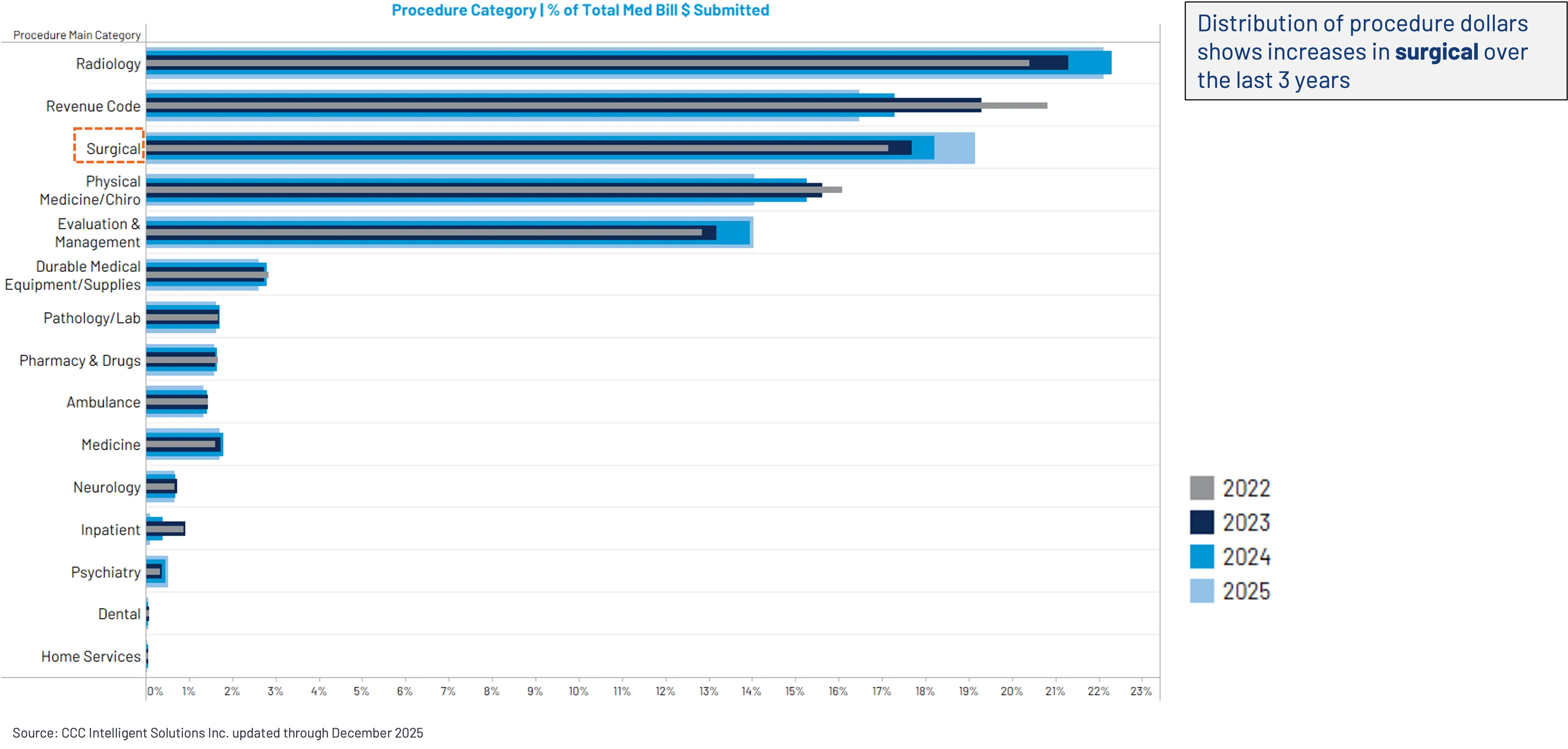
Auto bodily injury (BI) indemnity has entered a new phase – one defined less by catastrophic surgical interventions and more by the rapid expansion of low-complexity surgical procedures.
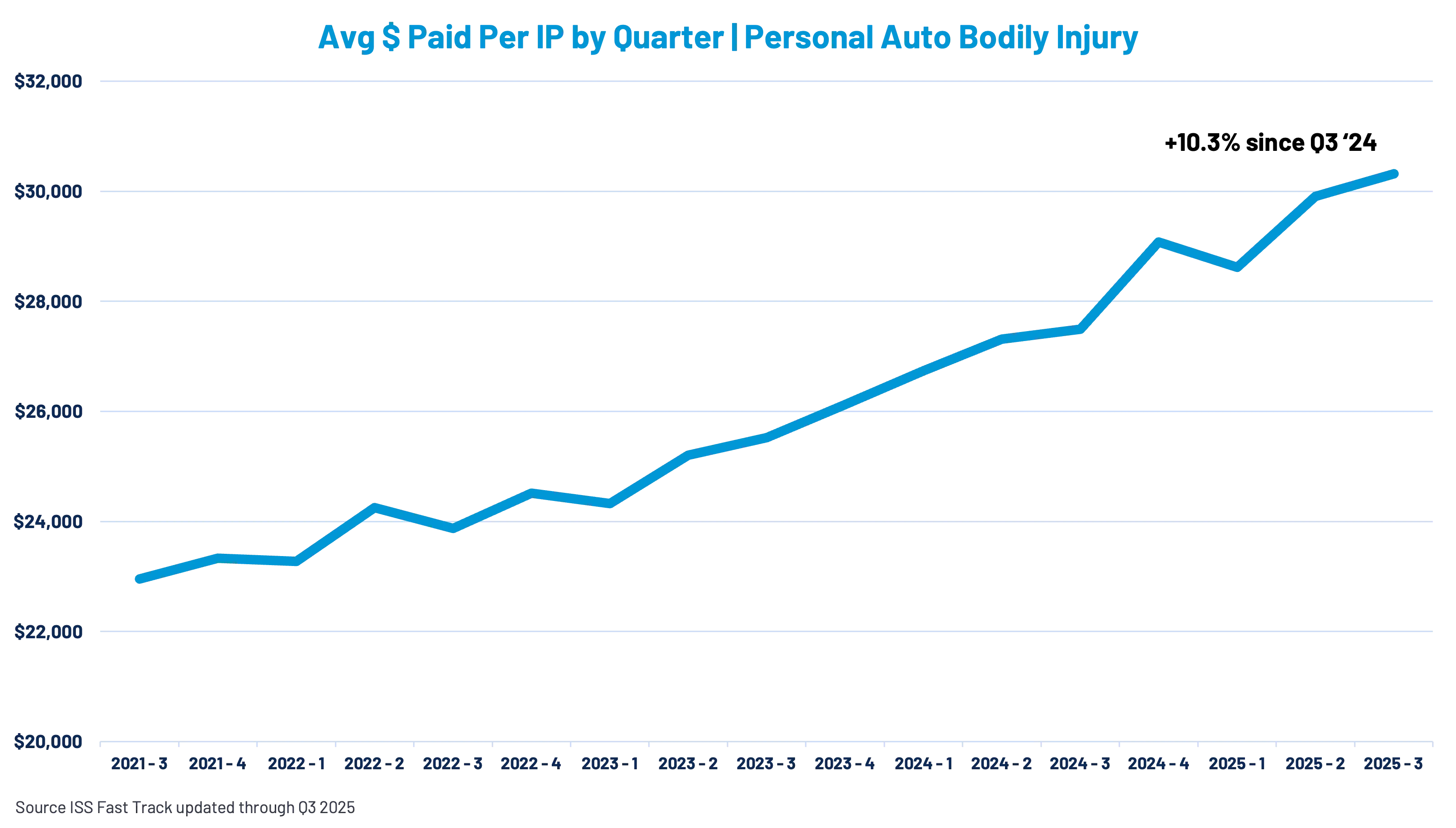
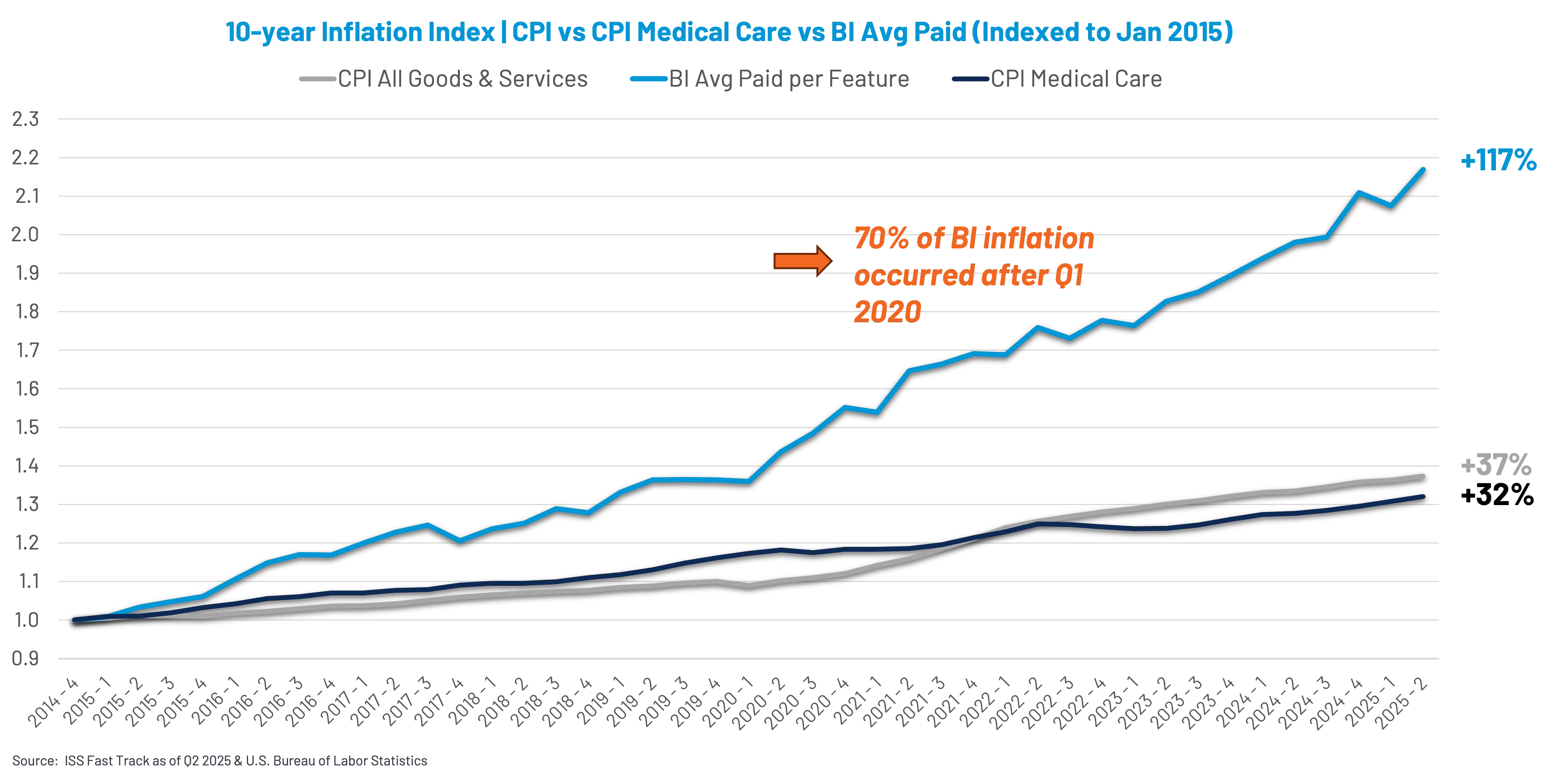
According to ISS Fast Track data, the average paid per personal auto BI claim has increased 9–10% year over year, rising more than 30% over the past four years to exceed $30,000 per feature. (Figure 1) Notably, 70% of that inflation has occurred since Q1 2020. (Figure 2)
While high-acuity surgeries such as fusions and discectomies remain part of the procedure mix, the most significant recent shift is occurring elsewhere: corticosteroid injections, and experimental procedures including platelet-rich plasma (PRP) therapy, and extracorporeal shockwave therapy (ESWT) are being utilized with increasing frequency and earlier in the treatment cycle.
Low Complexity Treatments, High-Cost Impact
CCC medical bill review data reveals several defining trends:
- Surgical dollars now represent a growing share of total BI spend. (Figure 3)
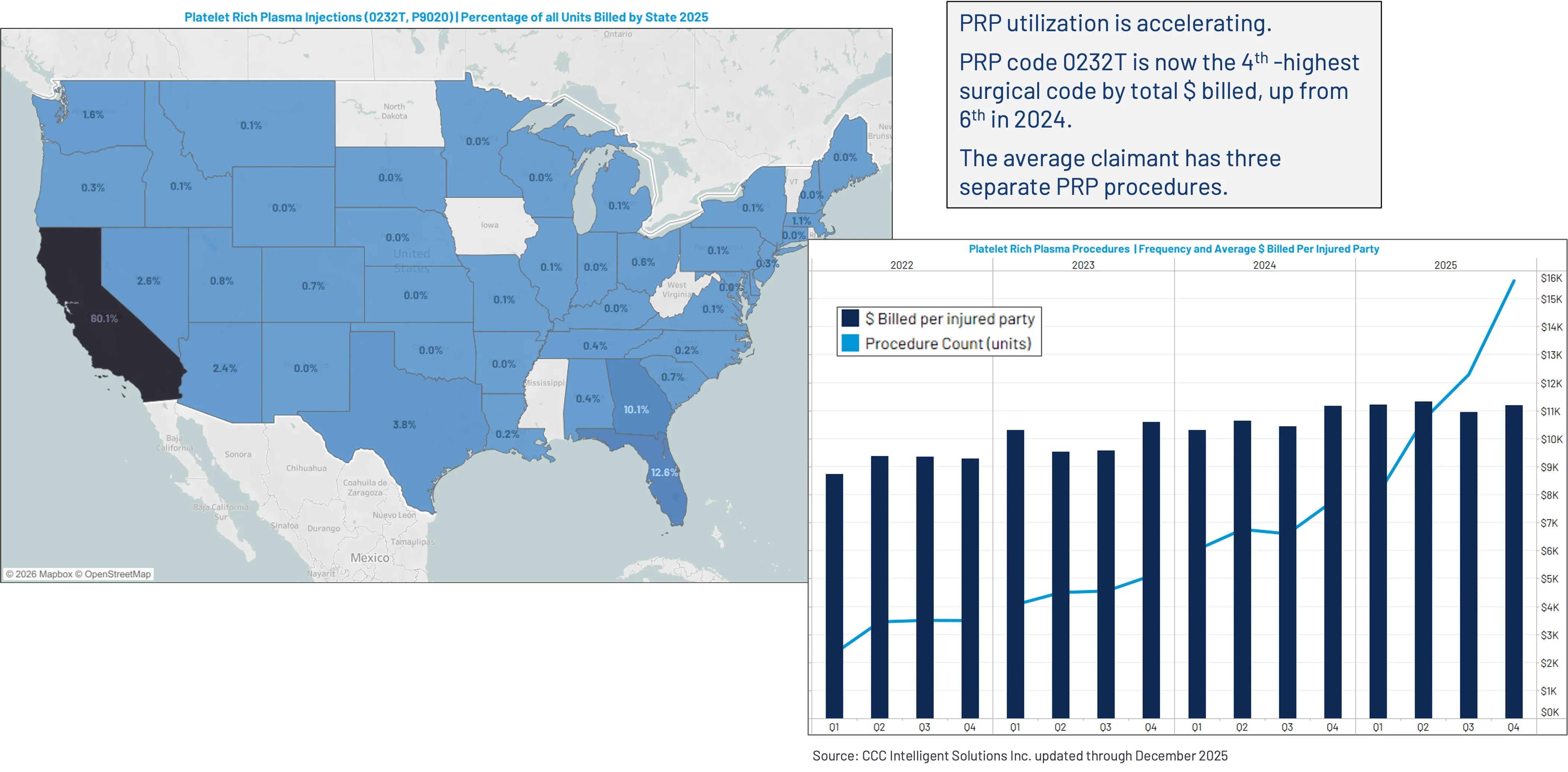
- PRP frequency has risen sharply from negligible levels just a few years ago. (Figure 4)
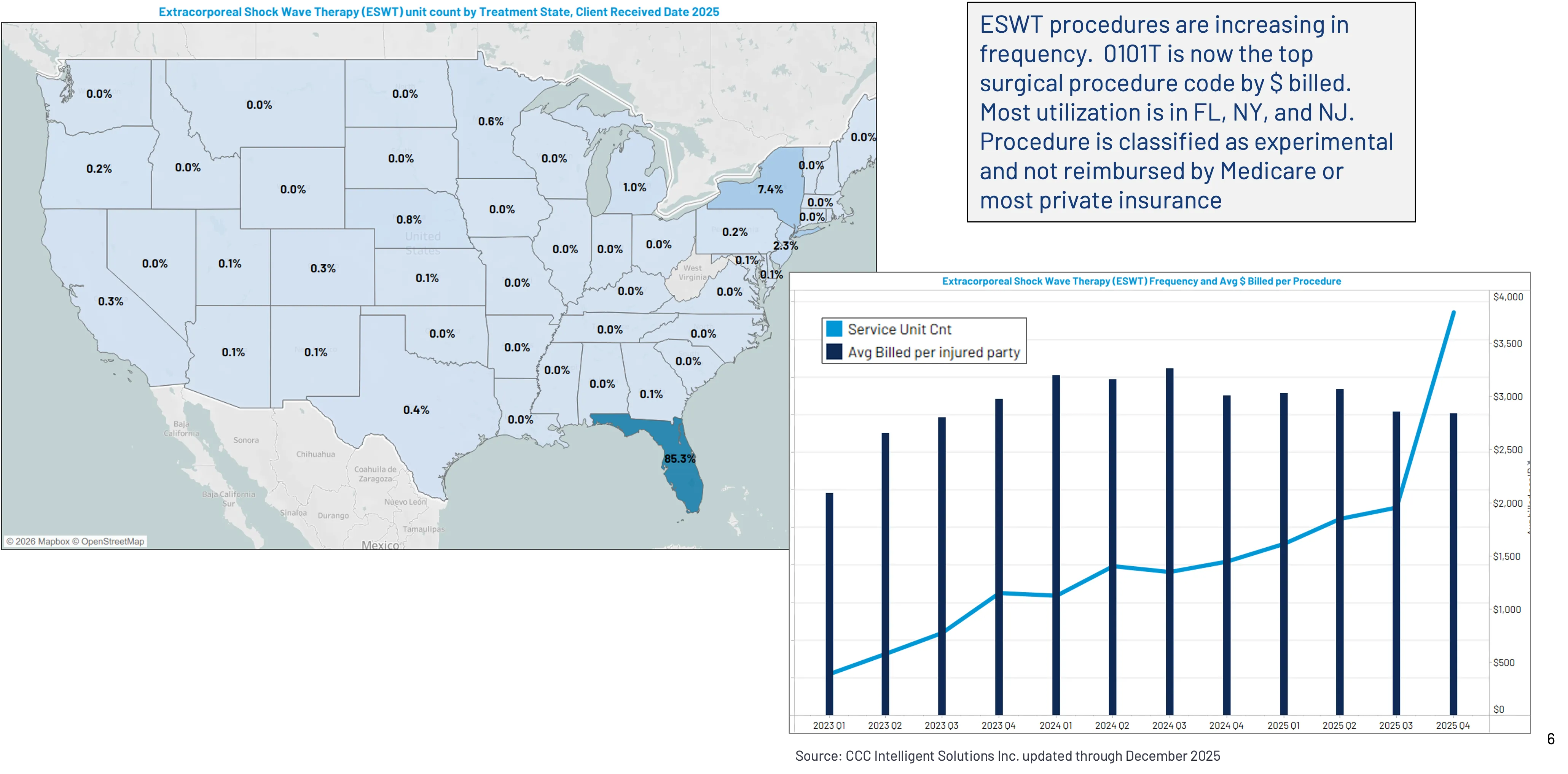
- Shockwave therapy is expanding rapidly across multiple jurisdictions. (Figure 5)
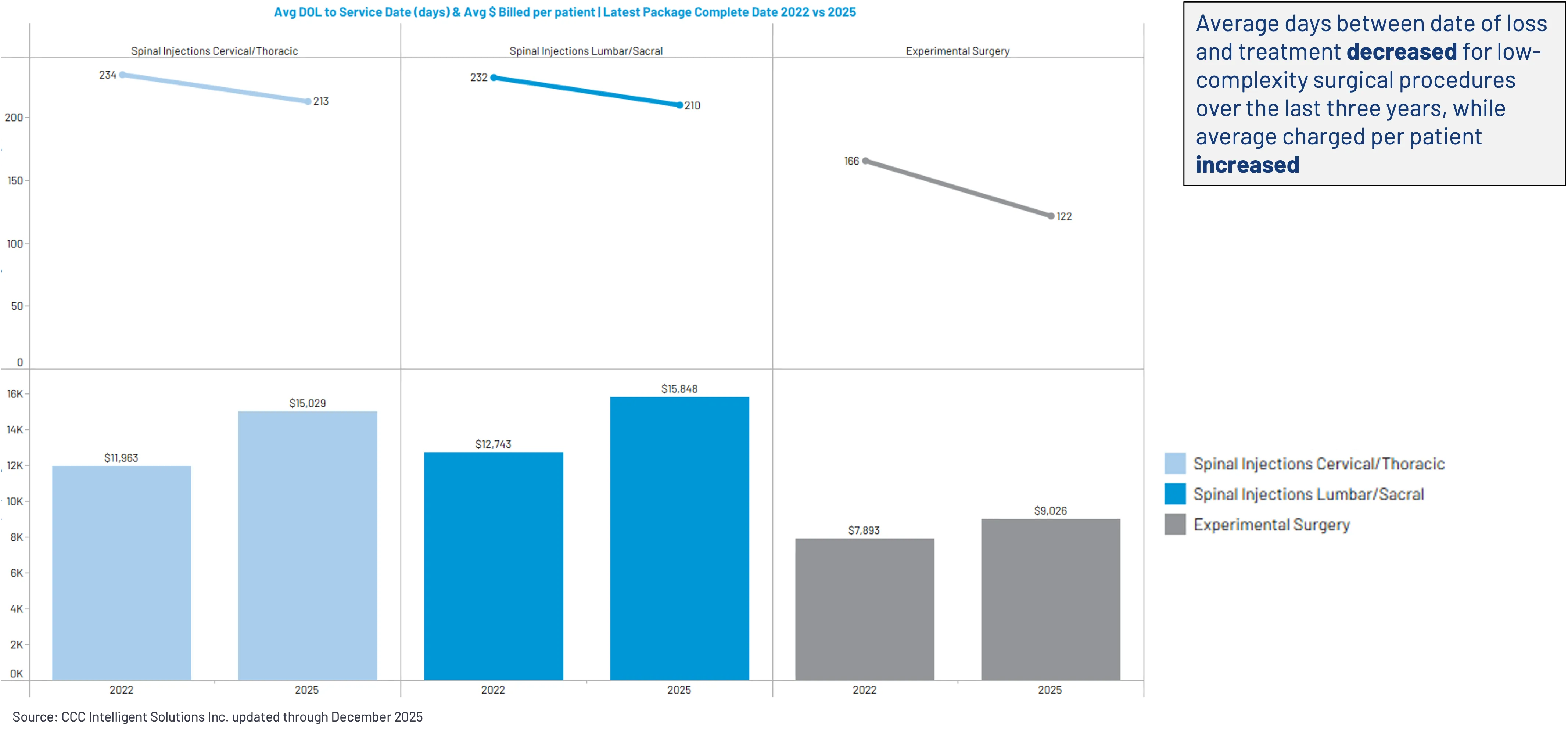
- Procedures are occurring earlier – experimental surgeries now average 122 days from date of loss, down from 166 days three years ago. (Figure 6)
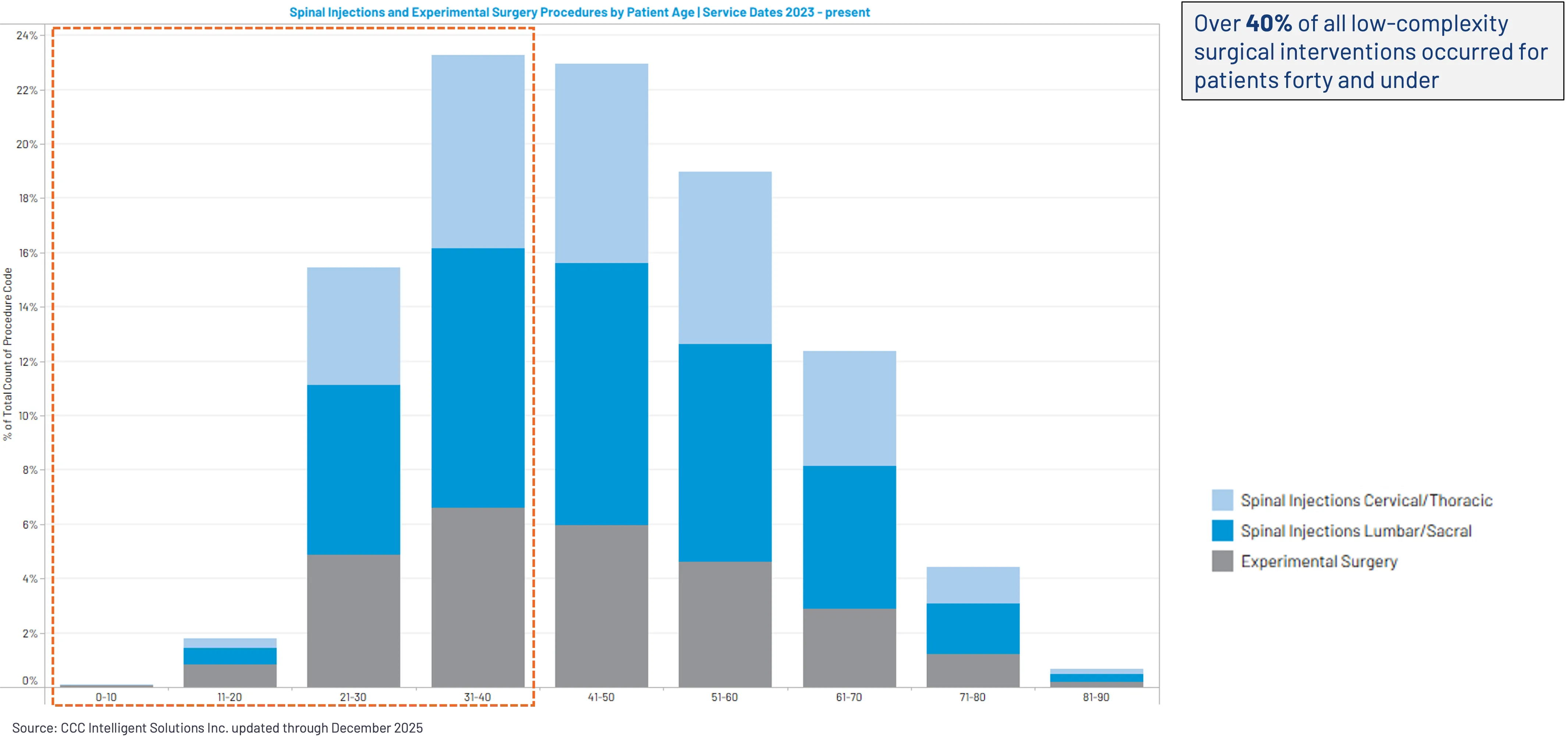
- Approximately 40% of low-complexity surgical treatments occur in claimants age 40 and under. (Figure 7)
The traditional sprain or strain recovery arc – conservative care followed by natural resolution – is being compressed and replaced by procedural intervention.
Corticosteroid Injections: Palliative, Not Curative
Corticosteroid injections remain the most common injection-based intervention in automotive BI claims, but according to experts, these are mostly palliative, meaning they alleviate symptoms, but they don't necessarily cure or speed the resolution of an injury.
While evidence shows modest benefit, some medical experts warn of its potential harms:
- Tendon weakening and rupture
- Joint deterioration
- Blood sugar instability in diabetics
CCC data indicates an average of three separate steroid injections per claimant – often delivered in scheduled "series of three" protocols. Therefore, the presence of boilerplate three-injection scheduling without documented interim evaluation should raise scrutiny.

The Rise of Experimental Injection Treatments
Platelet-rich plasma (PRP) therapy has become one of the fastest-growing cost drivers in BI. PRP is generally not reimbursed by Medicare, Medicaid, or private insurance for musculoskeletal soft tissue injuries, yet it's being used more frequently within auto casualty claims.
According to CCC data, PRP treatments alone average $11,000–$12,000 per injured party and typically involve three injections.
While PRP is approved in limited applications such as certain diabetic wound care contexts, some experts note a lack of high-level evidence supporting its use for neck, back, or joint sprain/strain injuries.
Two emerging utilization patterns are especially notable:
- Multiple PRP injections (three to four per claimant on average)
- Administration in ambulatory surgery centers rather than office settings
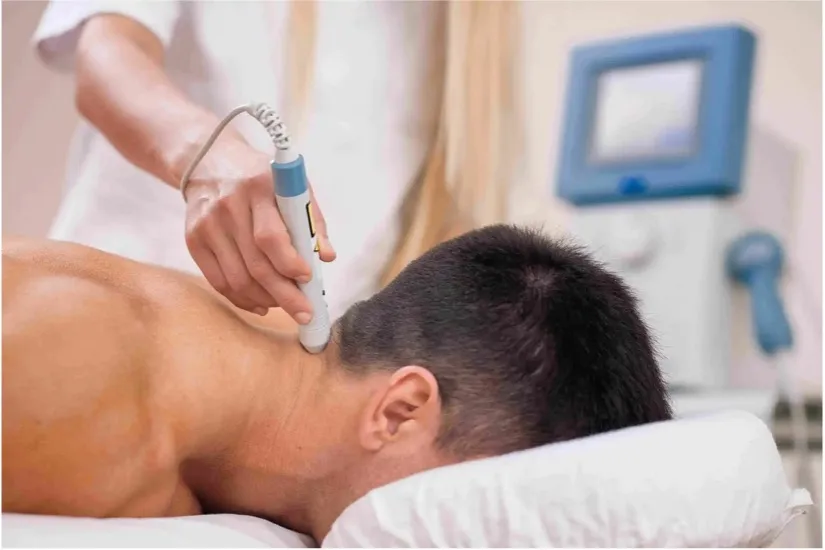
Originally used for kidney stone fragmentation, shockwave therapy has expanded into soft tissue pain management. CCC data indicates an average of eight to nine sessions per claimant. These interventions tend to target outcomes based on reported pain levels rather than measurable structural pathology.
Evaluation Insights for Adjusters
Beyond incurred treatment costs, injection-based therapies are increasingly tied to future medical demands. Recurring injection schedules and claims of indefinite future treatment don’t often align with how such care is typically handled in group health settings.
For adjusters, this creates compound exposure:
- Multiple injections
- Facility escalation
- Experimental procedures
- Ongoing future treatment claims
Accepting one intervention may open the door to a broader series – the "slippery slope" effect. Here are a few evaluation tips for adjusters:
- Objective vs. Subjective: Are complaints supported by objective examination or imaging? Look for inconsistencies between reported pain levels and objective markers such as vital signs.
- Timing: Did complaints arise immediately post-loss or emerge weeks later? These gaps do matter.
- Natural History: Inflammation from sprain and strain injuries typically improve with time – the body knows how to repair these types of damage.
- Treatment Escalation Without Reevaluation: Pre-scheduled injection series without documented improvement assessment signal scrutiny.
- Evidence Level: Not all studies carry equal weight. High-level blinded trials matter.
Bottom Line
Appropriate claim handling is about aligning treatment with evidence and natural healing principles.
The rise of low-complexity surgical interventions is not a temporary fluctuation – CCC data suggests continued acceleration across steroid injections, PRP, shockwave therapy, and other experimental procedures.
As such, these low-complexity interventions are now a major driver of high-indemnity outcomes. And as bodily injury claims continue to evolve, data-driven evaluation will remain essential to accurate indemnification and sustainable claims management.
For more on this topic, watch the video below where I interview two seasoned orthopedic surgeons – CCC's Chief Medical Advisor, Dr. Allen Deutsch, MD, and University of Texas professor of Surgery and Psychiatry, Dr. David Ring, MD, PhD.