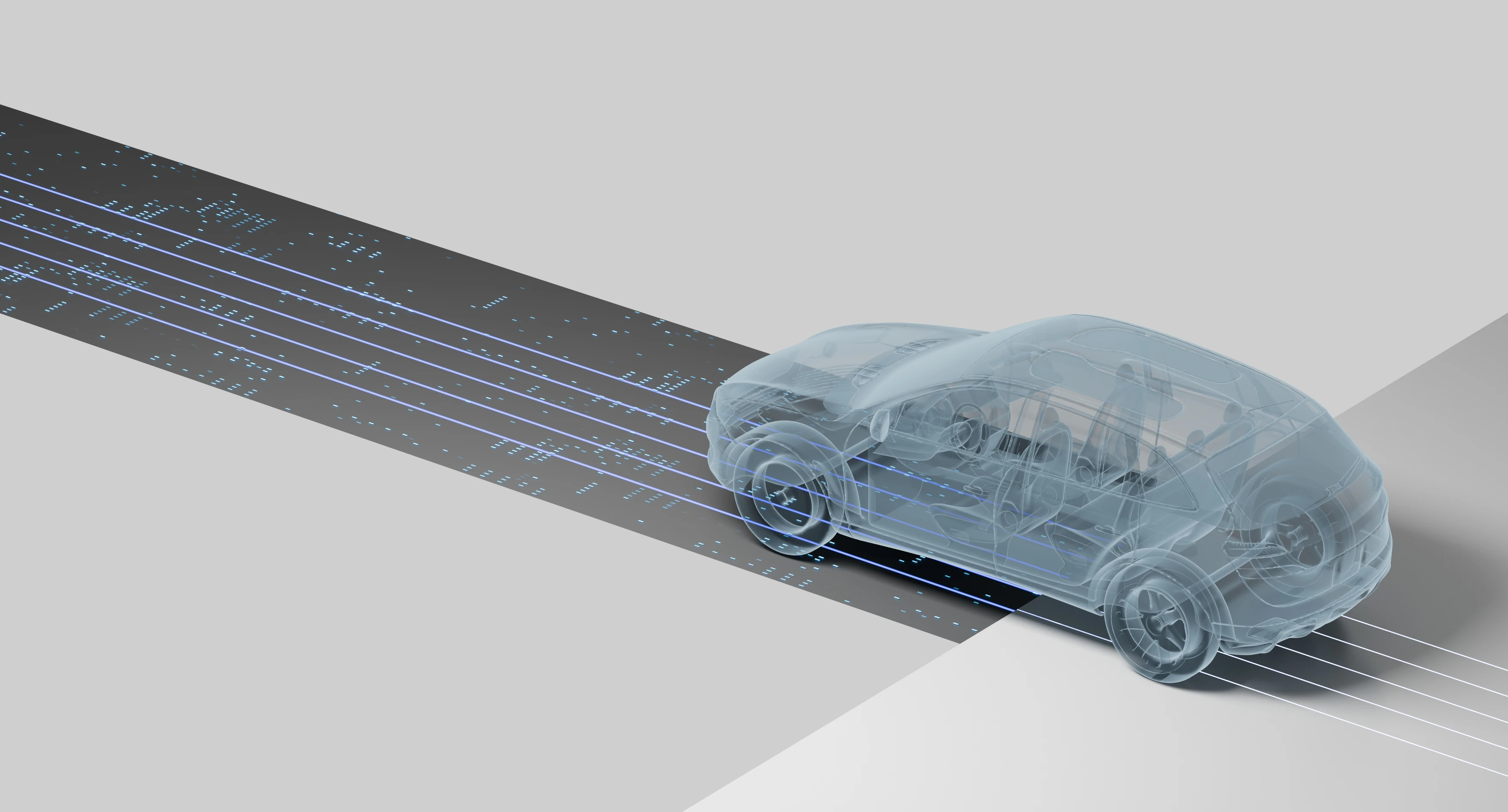
Let’s call it what it is: calibrations aren’t occasional add-ons anymore.
If you repair a vehicle with even minimal damage, one or more calibrations is very likely a part of completing the repair.
Today’s Cars Work on Precision
Modern vehicles rely on cameras, radar, and sensors to guide how key systems operate:
- Following distance
- Lane positioning
- Object detection
- Driver alerts and responses
All of that depends on exact positioning — down to tiny measurements that can’t be observed or validated with a visual inspection.
What Changes During a Repair? More Than You Think
You don’t need a major wreck to throw things off.
Everyday work can shift sensor position:
- Bumper removal or replacement
- Windshield removal
- Suspension or alignment work
- Front-end or body repairs
Even small changes can affect how those systems interpret what’s in front of them.
The Gap Between “Looks Fixed” and “Is Fixed”
A vehicle can leave the booth looking perfect. Paint matches. Panels line up.
But under the surface?
- A camera could be aimed slightly off
- A radar unit could be reading distance differently
- A system could be reacting slower or differently than designed
That’s because these systems don’t care how the car looks — they rely on measurements and angles being exact.
Why Does Precision Matter For Calibrations?
We’re talking about tolerances as small as fractions of a degree.
At speed, that tiny difference turns into real-world impact:
- Misread distance
- Incorrect detection
- Inconsistent system behavior
Even a slight shift in alignment can change how the vehicle responds. A camera that’s off by just one degree can cause a 5-foot miscalculation at 100 yards. And when a driver is traveling at 60mph, it takes just 3.4 seconds to go 100 yards. A 5-foot miscalculation is more than enough to cause an accident.
What Does a Calibration Actually Do?
Put simply: Calibrations tell the vehicle where everything is again.
It brings cameras and sensors back to manufacturer specs so they are positioned and operating properly:
- Read inputs correctly
- Communicate properly with the system
- Perform the way they’re designed to
Without that step, you’re leaving the job unfinished.
Not a Specialty — A Standard Step
Across the industry, calibration is quickly becoming routine work.
Not just for heavy hits, but for everyday jobs:
- Glass replacement
- Alignments
- Minor collisions
- Parts replacement
If the repair affects position, geometry, or mounting — calibration is on the table.
What This Means for Shops
The expectations have shifted.
Doing the job right now means:
- Checking if one or more calibrations are needed
- Following OEM procedures
- Making it part of your standard workflow
Because this isn’t about upselling — it’s about completing the work the right way.
The Bottom Line
Calibrations aren’t a “nice to have”.
They’re not optional.
They’re a regular part of the repair process.
And shops that treat it that way are the ones staying ahead. Having the right tools and processes in place are critical to performing safe and proper repairs. Every time.
CCC partners with a number of calibration (and diagnostic scan) providers so you can get reports and recommendations in your CCC ONE workfile. For a complete list, visit our Diagnostics page.
To optimize your scanning & calibration operations, contact your local representative HERE.