
January 13, 2026

How to Think About AI in 2026

Hero Background Image
"AI won't replace people, but maybe people who AI properly will replace people who don't."

This quote has been attributed to a number of different pioneers in the artificial intelligence space, and it’s an interesting perspective to consider in collision repair as we head into 2026. For our colleagues fearing the takeover of our robot overlords 😊, it's good to remember the following.

Skilled Roles Are Currently "AI Proof"
  • Complex manual work remains essential: Repair techs rely on nuanced judgment, dexterity, and hands-on problem-solving—traits that current AI and robotics cannot effectively replicate, making these roles resistant to full automation.
  • Human craft vs. automation: Tasks like welding, sanding, and refinishing rely on tactile sensitivity and adaptation to variable damage—capabilities still beyond AI systems.
AI Is a Partner—not a Replacement
  • Assisting estimators, not eliminating them: Experts emphasize that AI handles repetitive, low-complexity tasks (e.g., reading patterns, writing parts of estimates), freeing up human team members for judgment-heavy work.

    (For illustrative purposes, the bulk of this article was written with AI, but a human reviewed, fact-checked, edited, and streamlined the content to make it easier to read.)
  • Enhanced support: AI acts as a collaborator—enhancing diagnostics, streamlining repetitive work, and proposing best next steps—rather than replacing the skilled employee's role.
Automation of Entry-Level and Back-Office Tasks
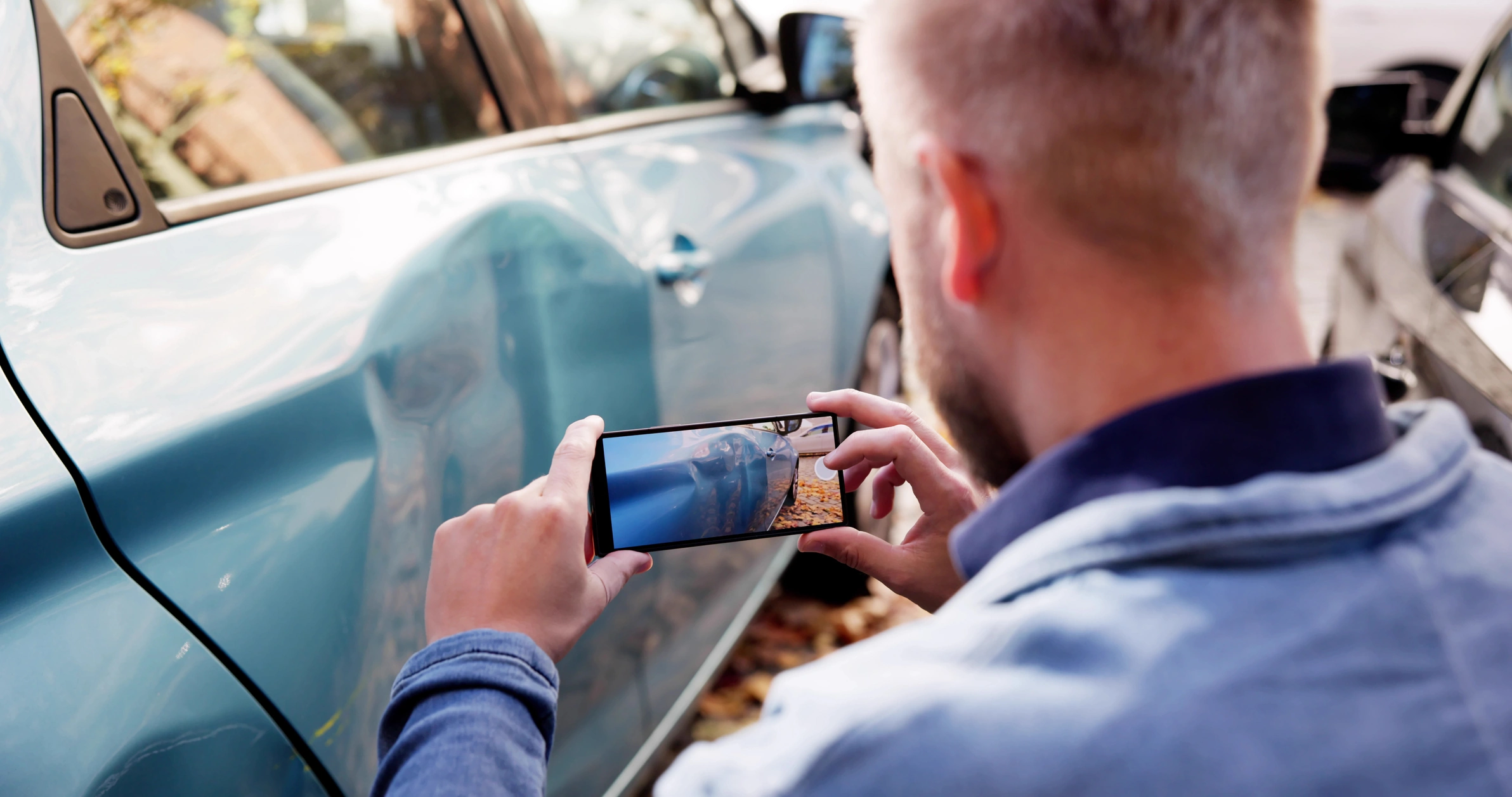
  • Routine administrative roles under pressure: AI-driven tools are automating certain clerical parts of the claim & repair intake process, including appointment scheduling and preliminary photo-based damage assessment. These types of tasks are ripe for automation, which would make it possible for team members to work on more human-intensive activities.
  • Mitigating the labor shortage: With decreasing availability of experienced staff, AI is seen as a way to enhance productivity—not to displace skilled workers. When used properly, AI can be thought of as an additional assistant for a shop’s front office team.
Job Shifts: Evolution, Not Elimination
  • Emerging hybrid roles: Shop personnel increasingly need to interpret AI insights, manage calibration tools, and oversee AI workflows—requiring digital literacy blended with traditional skills.
  • New roles are emerging: As AI becomes standard, specialized positions—such as AI workflow designers, prompt strategists, and system auditors—are appearing within service operations.
The Big Picture: Change Without Displacement
  • AI transforms tasks, not roles: AI streamlines specific activities like damage detection and routine paperwork, but it isn’t replacing human expertise—especially where physical skill, creativity, and judgment are required.
  • Tech human synergy increases efficiency: The goal is not to eliminate roles at collision shops, but to enhance them—supporting real-time diagnostics and decision-making through AI assistants.
  • Upskilling becomes critical: Personnel equipped to work alongside AI—interpreting its output, applying judgment, and troubleshooting—will be indispensable in 2026.
Summary Takeaway for 2026

AI won't replace the heart of collision repair—it will evolve it.

  • 🤖 Entry-level admin tasks may be automated
  • 🔧 Skilled manual work remains in human hands
  • 🤝 Team members evolve into AI-augmented experts
  • 📈 New support roles will arise from AI system integration

This year, successful body shops will be those that embrace AI as a strategic assistant, invest in targeted upskilling, and redefine employee roles around AI-enhanced workflows.

Want to learn more about how CCC is using AI throughout the process? Vist teh Data & AI page or cccis.com/team to find your local representative.

"AI won't replace people, but maybe people who AI properly will replace people who don't."

This quote has been attributed to a number of different pioneers in the artificial intelligence space, and it’s an interesting perspective to consider in collision repair as we head into 2026. For our colleagues fearing the takeover of our robot overlords 😊, it's good to remember the following.

Skilled Roles Are Currently "AI Proof"
  • Complex manual work remains essential: Repair techs rely on nuanced judgment, dexterity, and hands-on problem-solving—traits that current AI and robotics cannot effectively replicate, making these roles resistant to full automation.
  • Human craft vs. automation: Tasks like welding, sanding, and refinishing rely on tactile sensitivity and adaptation to variable damage—capabilities still beyond AI systems.
AI Is a Partner—not a Replacement
  • Assisting estimators, not eliminating them: Experts emphasize that AI handles repetitive, low-complexity tasks (e.g., reading patterns, writing parts of estimates), freeing up human team members for judgment-heavy work.

    (For illustrative purposes, the bulk of this article was written with AI, but a human reviewed, fact-checked, edited, and streamlined the content to make it easier to read.)
  • Enhanced support: AI acts as a collaborator—enhancing diagnostics, streamlining repetitive work, and proposing best next steps—rather than replacing the skilled employee's role.
Automation of Entry-Level and Back-Office Tasks
  • Routine administrative roles under pressure: AI-driven tools are automating certain clerical parts of the claim & repair intake process, including appointment scheduling and preliminary photo-based damage assessment. These types of tasks are ripe for automation, which would make it possible for team members to work on more human-intensive activities.
  • Mitigating the labor shortage: With decreasing availability of experienced staff, AI is seen as a way to enhance productivity—not to displace skilled workers. When used properly, AI can be thought of as an additional assistant for a shop’s front office team.
Job Shifts: Evolution, Not Elimination
  • Emerging hybrid roles: Shop personnel increasingly need to interpret AI insights, manage calibration tools, and oversee AI workflows—requiring digital literacy blended with traditional skills.
  • New roles are emerging: As AI becomes standard, specialized positions—such as AI workflow designers, prompt strategists, and system auditors—are appearing within service operations.
The Big Picture: Change Without Displacement
  • AI transforms tasks, not roles: AI streamlines specific activities like damage detection and routine paperwork, but it isn’t replacing human expertise—especially where physical skill, creativity, and judgment are required.
  • Tech human synergy increases efficiency: The goal is not to eliminate roles at collision shops, but to enhance them—supporting real-time diagnostics and decision-making through AI assistants.
  • Upskilling becomes critical: Personnel equipped to work alongside AI—interpreting its output, applying judgment, and troubleshooting—will be indispensable in 2026.
Summary Takeaway for 2026

AI won't replace the heart of collision repair—it will evolve it.

  • 🤖 Entry-level admin tasks may be automated
  • 🔧 Skilled manual work remains in human hands
  • 🤝 Team members evolve into AI-augmented experts
  • 📈 New support roles will arise from AI system integration

This year, successful body shops will be those that embrace AI as a strategic assistant, invest in targeted upskilling, and redefine employee roles around AI-enhanced workflows.

Want to learn more about how CCC is using AI throughout the process? Vist teh Data & AI page or cccis.com/team to find your local representative.
No items found.
Share this post

More Insights

Navigating Uncertainty: What to Look for in 2026Navigating Uncertainty: What to Look for in 2026
Blog

Navigating Uncertainty: What to Look for in 2026

Read more
Run My Business: Unlocking Hidden Profits: The Real-Time Advantage in Collision RepairRun My Business: Unlocking Hidden Profits: The Real-Time Advantage in Collision Repair
Blog
6 MIN READ

Run My Business: Unlocking Hidden Profits: The Real-Time Advantage in Collision Repair

Read more
Run My Business: What Every Collision Shop Should Know About Review ResponsesRun My Business: What Every Collision Shop Should Know About Review Responses
Blog
4 MIN READ

Run My Business: What Every Collision Shop Should Know About Review Responses

Read more